
What Is the Best Trim for Tile Edges? Stainless Steel vs Aluminium vs PVC (Singapore Guide)
When it comes to tile finishing, one of the most common questions homeowners and interior designers ask is:
👉 “What is the best trim for tile edges?”
Many people still use plastic or aluminium trims, but in modern interiors across Singapore, stainless steel trims — especially SS 304 — are becoming the preferred choice for both carpentry and tile applications.
In this guide, we break down the real differences between stainless steel, aluminium, and PVC trims, so you can choose the right solution for your project.
Why Do You Need Tile Edge Trim in the First Place?
Tile edge trim is not just decorative — it serves important functions:
- Protects tile edges from chipping
- Creates a clean, professional finish
- Prevents sharp or exposed edges
- Enhances overall interior design
👉 Without proper trim, even high-end tiles can look unfinished.
Stainless Steel vs Aluminium vs PVC Trim — What’s the Difference?
1. Stainless Steel Trim (SS 304)
Best for: Premium interiors, long-term durability
Pros:
- Extremely durable and corrosion-resistant
- Premium look (mirror, brushed, gold, black finishes)
- Suitable for wet areas (bathrooms, kitchens)
- Does not fade or warp over time
Cons:
- Price slightly higher than aluminium trim
👉 Most architects prefer stainless steel trims for high-end projects because they maintain their finish over time.
2. Aluminium Trim
Best for: Mid-range projects
Pros:
- Lightweight
- More affordable than stainless steel
- Available in multiple colors
Cons:
- Can oxidize or discolor over time
- Less durable in wet environments
- Coating may peel or scratch
3. PVC / Plastic Trim
Best for: Budget projects
Pros:
- Lowest cost
- Easy to install
Cons:
- Looks cheap in premium interiors
- Can crack, discolor, or warp
- Not suitable for long-term use
Why Stainless Steel Trim (SS 304) Is the Preferred Choice in Singapore
In Singapore’s humid climate, material performance is critical.
Here’s why SS 304 stands out:
- Humidity resistant → No rust or corrosion
- Long lifespan → Ideal for residential & commercial projects
- Premium aesthetics → Matches modern interior trends
- Versatility → Suitable for tiles, carpentry edges, wall panels
👉 This is why many interior designers are shifting away from PVC and aluminium trim
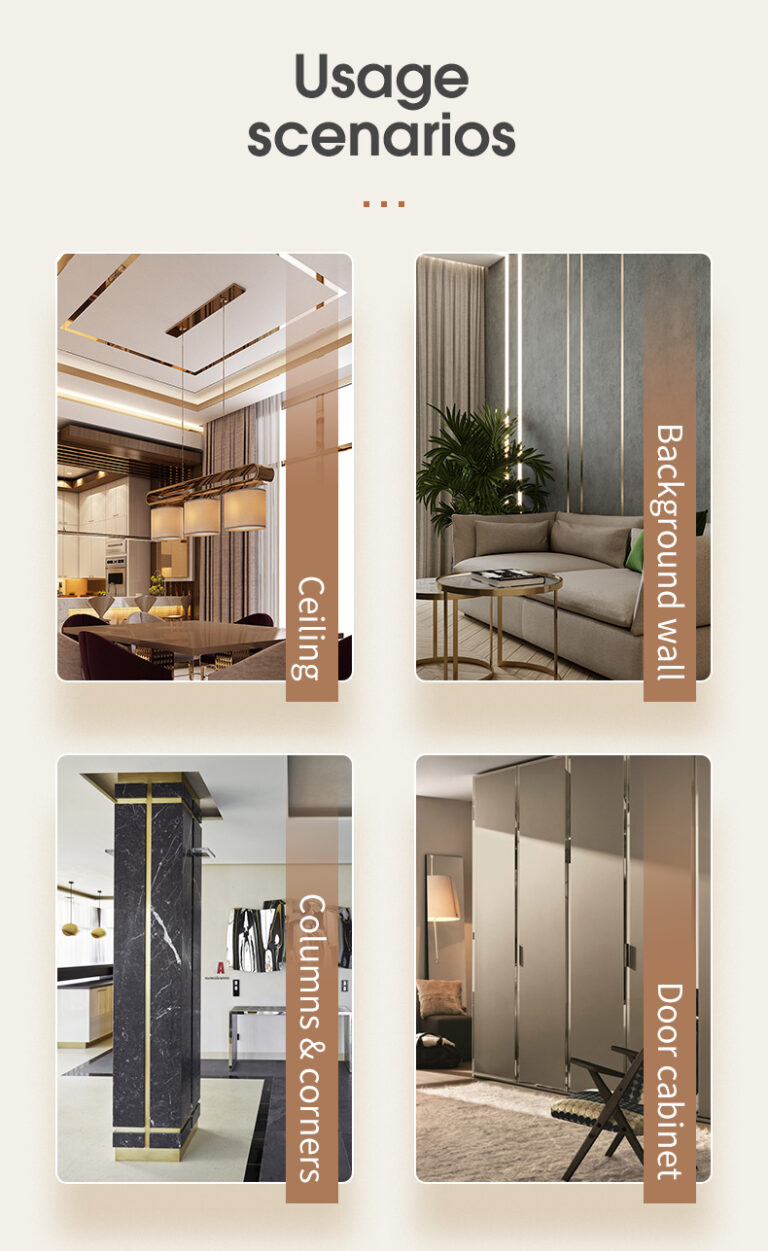
Where Can Stainless Steel Decorative Trims Be Used?
This is where you connect to your product range:
- Tile edge finishing (walls & floors)
- Carpentry edges (wardrobes, cabinets)
- Feature walls and panel detailing
- Kitchen backsplash finishing
- Bathroom corners and transitions
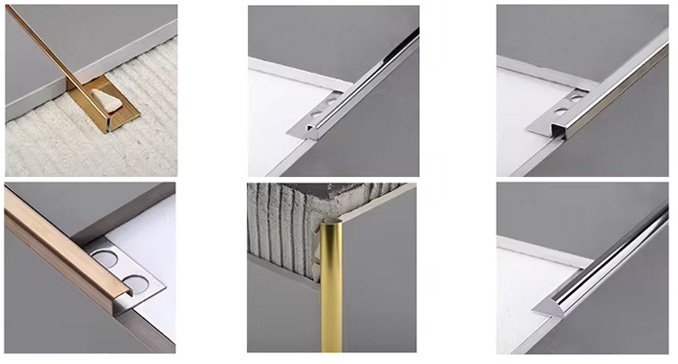
👉 These trims are commonly available in:
- U shape
- L shape
- T shape
- Flat bar inlay
How to Choose the Right Stainless Steel Trim for Your Project
Here’s what designers and contractors usually consider:
1. Thickness & Profile
- Match trim thickness with tile or panel
2. Finish
- Mirror (luxury look)
- Brushed (modern subtle finish)
- Gold / black (feature design highlight)
3. Application Area
- Wet area → always choose SS 304
- Dry area → more flexibility
Common Questions People Ask
Is stainless steel trim better than aluminium?
Yes — especially for durability, aesthetics, and long-term performance.
Will stainless steel trim rust?
SS 304 is corrosion-resistant and suitable for Singapore conditions.
Is it suitable for carpentry edges?
Yes — widely used for wardrobes, cabinets, and feature panels.
Where to Find Stainless Steel Trim Supplier in Singapore
If you are working on a renovation or interior project, it’s important to choose a supplier that offers:
- Custom sizes and profiles
- Consistent finishing quality
- Reliable stock and lead time
👉 At APlus Hardware Supplies, we specialize in custom SS 304 decorative metal trims for carpentry and tile applications, tailored for designers and architects.
👉 If you’re planning a project and need advice on selecting the right trim profile or finish, you can WhatsApp us directly to discuss your requirements.
📞 +65 9866 8665
📧 sales@aplus-hs.com
🌐 www.aplushardwaresupplies.com